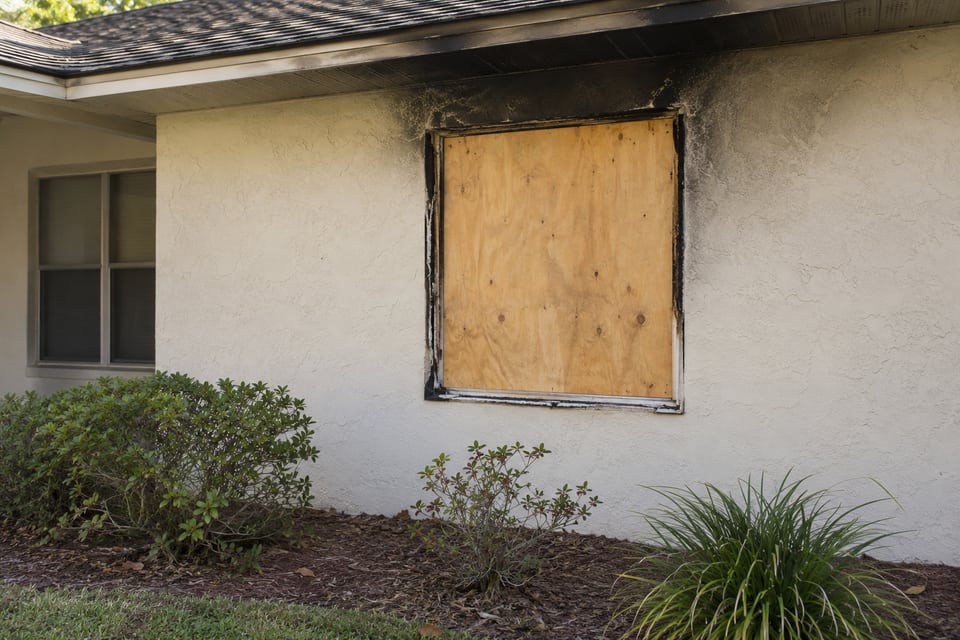
What if securing the damaged door would close the only usable entrance?
Tell the person planning protection about every access restriction before work begins. Ask for a plan that follows official safety directions and preserves any required route for approved entry. Do not assume an opening can simply be sealed because it is damaged, particularly if investigators or repair trades still need access.
What to establish first
Start with a simple description of each opening: door, window or roof, the room it serves and whether it can be reached without entering a restricted area. Use existing safe photos where possible. There is no need to approach unstable material or climb to obtain a dimension for the first call.
If someone will hold keys or meet workers, name that person in the work approval. Agree who can approve access and changes while you are away. A household member, landlord and insurer may each have different roles. Naming a contact does not by itself transfer ownership or payment responsibility.
Agree the cleanup scope
Ask the temporary-work plan to state exactly what protection is included and what it is intended to do. Check whether the price includes taking away broken parts. Ask what needs more review and how to report a problem after the work. A temporary cover should not become approval to rebuild.
For damaged frames, roofing or other building parts, request the separate repair scope and permit plan. A rule for emergency work may not cover each change to the building. Florida license rules depend on the task. Ask the contractor for the license that fits the planned repair.
- Which entry routes must remain available?
- Who is the named access and approval contact?
- What is excluded from the temporary protection price?
Local checks and the next decision
The White City Park address in the county directory is an example of a Fort Pierce postal address outside a simple city-name assumption. Use the damaged property’s actual parcel location to choose the building office. County and city requirements need to be checked for the intended work rather than inferred from the neighborhood label.
Start the call with any emergency limits still in place. Then describe the opening. Ask about available review and the details needed for a written scope. Keep a record of the temporary protection for the next contractor. Note what was fixed in place, taken out or left for more checks.
www.slcfd.comU.S. Fire AdministrationSt. Lucie CountySt. Lucie Countywww.flsenate.gov