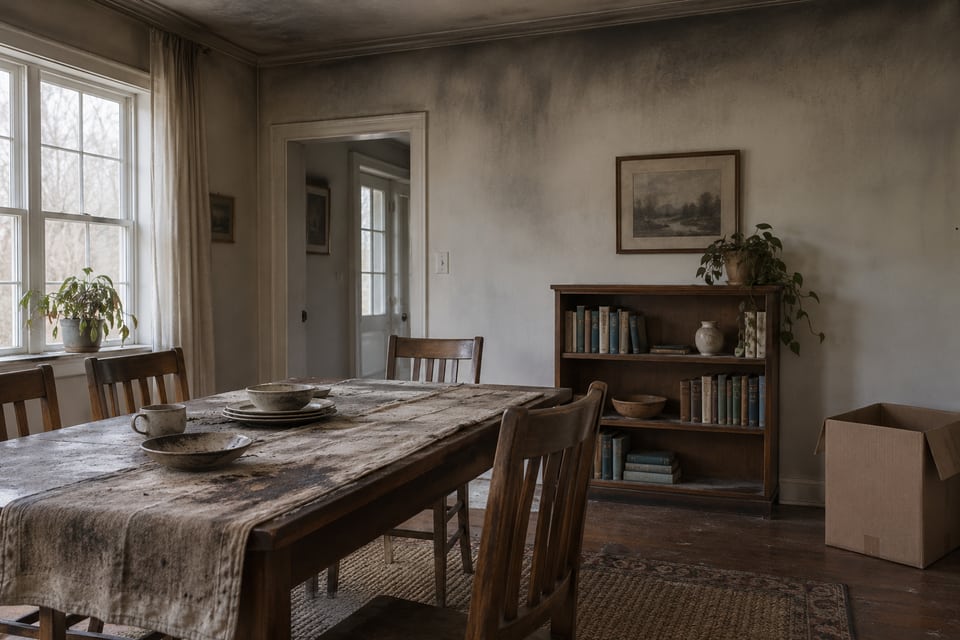
Why does the house still smell after the visible soot is gone?
An odor report alone cannot name the source. The review may need to consider remaining materials, belongings and areas outside the first cleaning scope. Removing visible marks and addressing odor are separate decisions.
Locate the concern before choosing treatment
“The whole house smells” is a starting point. Make the description more useful without staying in an unsafe room: was the odor reported in a bedroom, a closet, near a group of stored items or across several rooms? Was that before or after the room was cleaned? Keep what you saw separate from a guess about the cause.
For example, a room assessed while empty and the same room after furniture returns are different conditions. Record that change. It gives the assessor a concrete question about the room and its contents without treating either one as the proven source.
EPA identifies control of pollution sources as an important first step in improving indoor air. An odor plan should explain what source is being addressed, rather than rely on a machine name or a scented product as the whole explanation.
U.S. Environmental Protection Agency
Keep a short odor record
Use a simple record of the place, date and condition when the odor was noticed. Include whether the room was empty, what had just been moved in and what work had been completed. Do not repeatedly enter a restricted area or turn equipment on to recreate the smell.
Separate a smoke description from a new musty smell after water damage. Neither description is a diagnosis. A wet-building concern deserves a moisture review; an odor treatment plan should not quietly absorb it into the same task.
- Name the room and the most specific safe observation available.
- List furniture, rugs or boxes brought back before the odor returned.
- Record earlier cleaning or treatment and any products used.
- Note closed spaces that have not yet been assessed.
Distinguish air cleaning from source removal
EPA explains that air cleaners differ in what they remove. A particle filter and a filter intended for gases do not do the same job. Filtration alone does not remove every pollutant. Ask what the equipment is intended to address and what cleaning or material decisions must happen alongside it.
Ozone is a lung irritant. EPA says not to use ozone generators where people are present. At levels within public health limits, ozone generally does not remove many chemicals that cause odors. Do not rent a generator and use smell or a timer to decide when a room is safe.
If a treatment requires people or pets to leave, obtain the full exclusion and re-entry instructions before approving it. Ask who controls entry. Find out who checks the space when treatment ends. Check whether anyone in the next room must also leave. A promise to remove the smell does not answer those questions.
U.S. Environmental Protection AgencyU.S. Environmental Protection Agency
Define what a follow-up will cover
Agree which rooms and items the work covers. Also agree how to report an odor that remains. Compare the same room in the same state each time. A brief visit just after a scent is added tells you little.
Keep building materials, loose belongings and heating and cooling equipment as separate lines in the scope. An odor treatment quote may leave out paint, duct work or new furniture. Opening walls and fixing wiring may also be extra. Any added task needs an explanation and an agreed price.
A space with no smell has not passed a safety check. EPA specifically warns that a lack of ozone smell does not establish a safe ozone level. Talk to a health professional about symptoms. Ask the fire or building officials what checks are needed before you can live in the home.
U.S. Environmental Protection Agency
Questions about this work
Will an air purifier finish fire cleanup?
An air cleaner may address some airborne pollutants. It does not settle whether damaged materials or belongings still need cleaning or removal. Match any device to a documented purpose within the wider scope.
Can odor treatment guarantee a safe home?
No. An odor result does not establish structural, electrical or indoor-air safety. Ask what has been assessed, which limits remain and who is responsible for any required clearance.
U.S. Environmental Protection AgencyU.S. Environmental Protection Agency