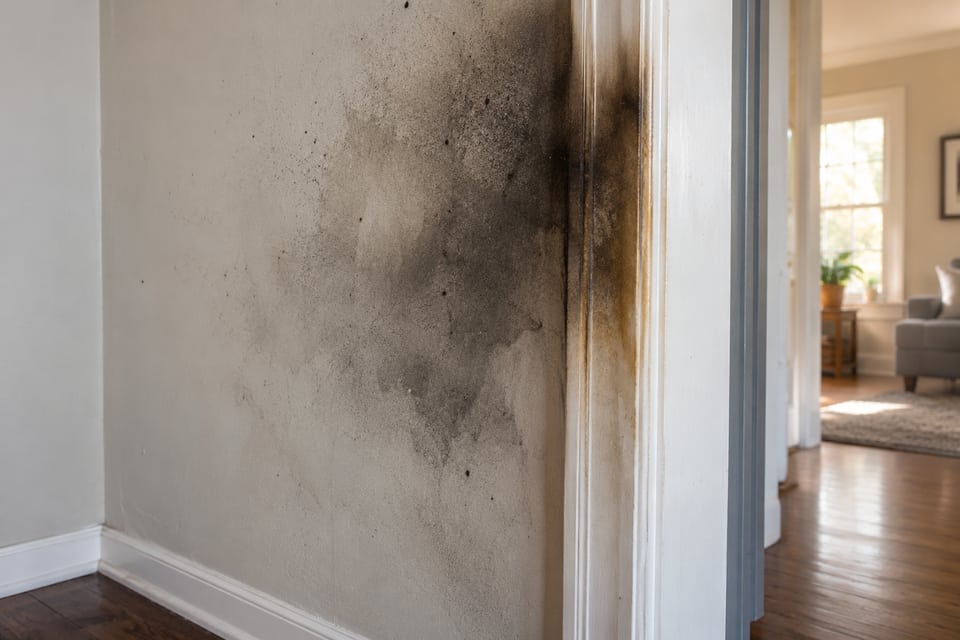
Does visible soot mean everything in the room must be replaced?
No blanket answer fits a whole room. The surface, heat damage, moisture and cleaning result matter. A useful assessment separates what can be cleaned from damaged materials and work that needs a qualified trade.
Start with the surface, not a bottle of cleaner
A dark mark on painted drywall raises a distinct question from residue on glass or an unfinished wood shelf. Note the material and where the mark appears. A cabinet door, its interior and the items inside it are three places to check. One clean-looking side cannot settle the condition of the others.
The American Red Cross warns that soot smears easily. Avoid touching it to test whether it comes off. A phone photo taken from a safe spot where entry is allowed can record the pattern without rubbing the surface. Leave cleaning tests to someone who can choose a method suited to the finish.
Heat damage also needs a separate decision. Describe blistered paint, a warped panel or a broken fitting as you see it. Do not call it cosmetic damage, or assume a blackened surface is beyond repair, based on its color alone.
American Red Cross
Record where the visible damage stops
Once entry is allowed, make a simple room list using what you can see without opening walls or moving debris. Include rooms with residue, rooms with an odor but no visible marks, and rooms you could not safely check. An unchecked room is an unknown, not a clean room.
For each affected space, note whether the concern is on the ceiling, wall, floor, fixed cabinets or loose belongings. Add any water left by firefighting. This turns a vague request to clean the house into a clearer starting point for inspection. It also helps keep building cleaning and contents cleaning from being counted as the same task.
- Mark the room and surface in each photo description.
- Keep photos taken before cleaning separate from later progress photos.
- List spaces that remain closed or unsafe to enter.
- Tell the assessor about any cleaning products already applied.
Separate cleaning from painting and replacement
Look for a scope that names both the surface and the planned action. “Clean kitchen walls and ceiling” is more useful than “restore kitchen.” If a test area is planned, ask what result will decide whether cleaning continues. For a damaged finish, ask whether the price covers cleaning only, surface preparation, new paint or replacement.
A photo of a room cannot show what is inside a wall, above a ceiling or within heating and cooling equipment. Any decision to open those areas needs its own reason and approval. Ask how unexpected damage will be documented before the scope changes.
Electrical repairs, structural repairs, mold work and replacement of damaged building materials are separate questions. A soot-cleaning description is not evidence that those tasks are included or that the person doing them holds any required license.
Review the same rooms when cleaning ends
Use the first room list to review the work. Check which listed surfaces were treated, which could not be cleaned, and which were left for repair. Keep remaining stains separate from remaining odor in your notes; they may call for different next steps.
If a scope excludes cabinets, closets, contents or air-handling equipment, resolve that gap before assuming the entire property has been addressed. Ask for a clear account of unfinished items. No page or photo can certify that a fire-damaged home is safe to occupy. Follow the instructions of the relevant authorities and qualified professionals.
Questions about this work
Should I paint over a soot mark?
First establish whether the surface needs cleaning, repair or removal. Ask for the reason behind any planned coating and what preparation it requires. A fresh finish is not proof that the underlying fire damage has been addressed.
Does a soot-cleaning estimate include odor treatment?
Only if the written scope says so. List the rooms with an odor and ask how that concern will be assessed separately from residue you can see.